Some of my students and friends in music have asked me what pieces I played as a young student. While I was not a prodigy like Mozart or Saint-Saëns I was fortunate to have teachers who encouraged me to explore a variety of music at a fairly young age. Here is a summary of what I played from my earliest lessons through age fourteen. Perhaps other students will be encouraged to try this great music!
Beginnings: 1992 to 1994
I had about a year of piano lessons with my Arlington piano teacher, Mrs. Meng, when I first performed in a recital at age seven. I played Soldier’s March, a little piece with dotted rhythms from the Op. 68 Album for the Young by Schumann. Being a Suzuki student I played The Happy Farmer, also from Op. 68, a little while afterward. My family had just started raising chickens so Mrs. Meng told me the chords in the right hand were like hens lightly pecking the earth. She was a creative and gifted children’s teacher, uncompromising with fundamentals but generous with stickers.

Schumann: Soldier’s March
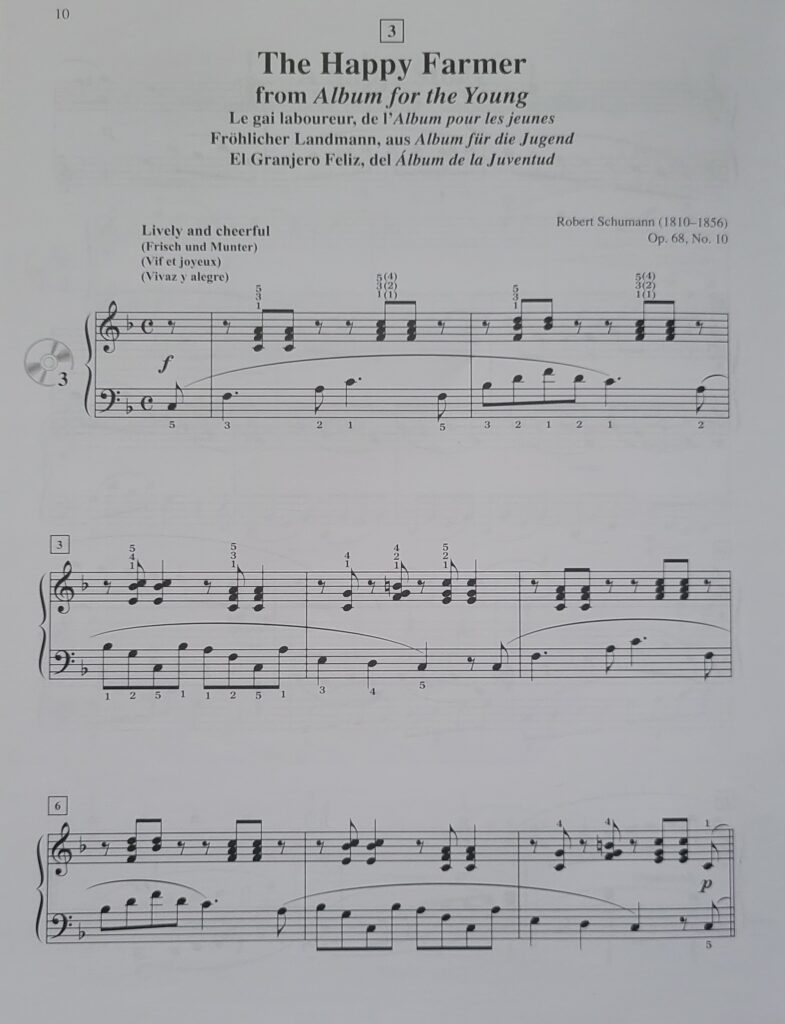
Schumann: The Happy Farmer
A move to Whatcom County, a new teacher: 1995 to 1997
A new job for my Dad led our family to the rural town of Acme in the autumn of 1994. We met our new piano teacher, Mrs. Brusher, in a rather unusual way. During our first winter in Acme she had a minor car accident on the icy bridge near our house and came knocking on our door to ask if she could use the telephone. This was before everyone had cell phones. It was a cold day so we invited her inside while she waited for help to arrive. My sister Amy and I played a bit of piano for her and she ended up telling us she was a Suzuki piano teacher. We started lessons with her soon after. She was the one who introduced me to Chopin. I have great memories of lessons with her on children’s pieces by Kabalevsky, Le petit noir by Debussy and the famous Chopin nocturne in E-flat major. Mrs. Brusher would float around her studio in her frizzy hair and stylish hippie robes, demonstrating often at her upright piano while her students got to play her nice grand. She made me play scales in all the keys. With her flowing robes and effortlessly graceful technique she seemed a bit like a witch to me. A good one, of course.
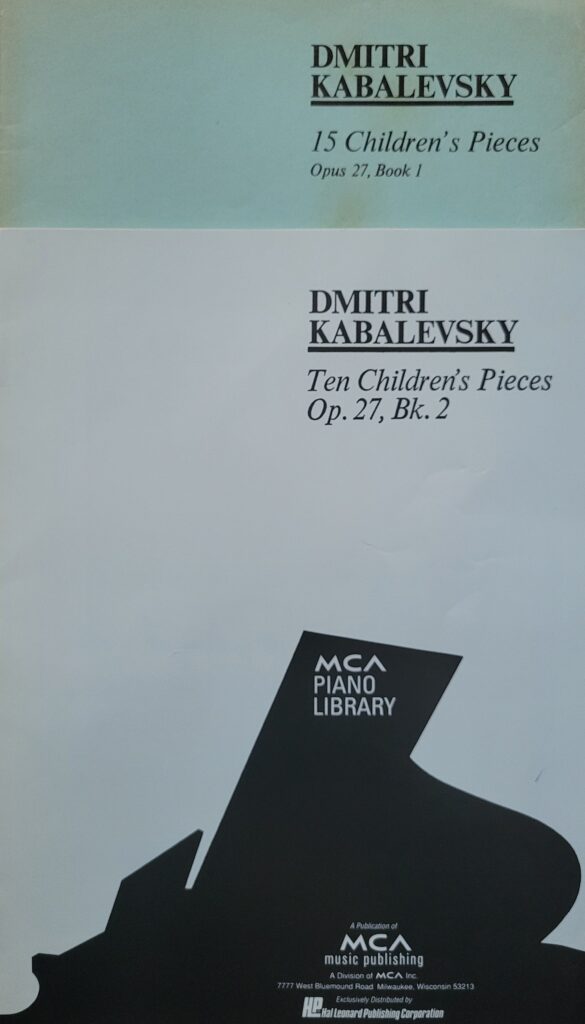
Kabalevsky: Children’s Pieces
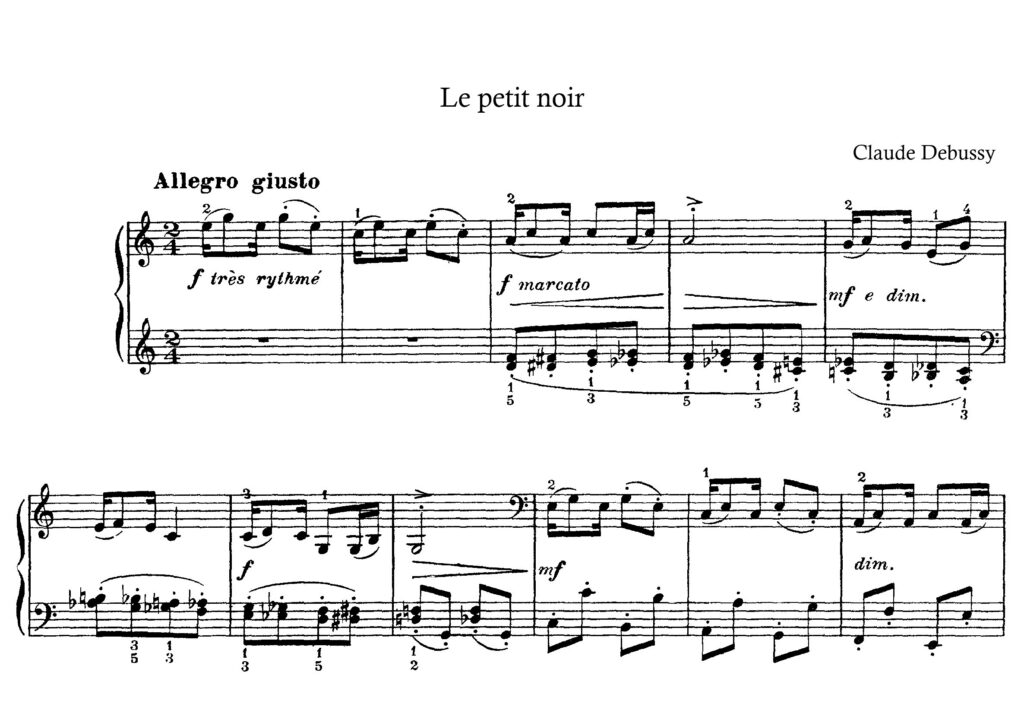
Debussy: Le petit noir
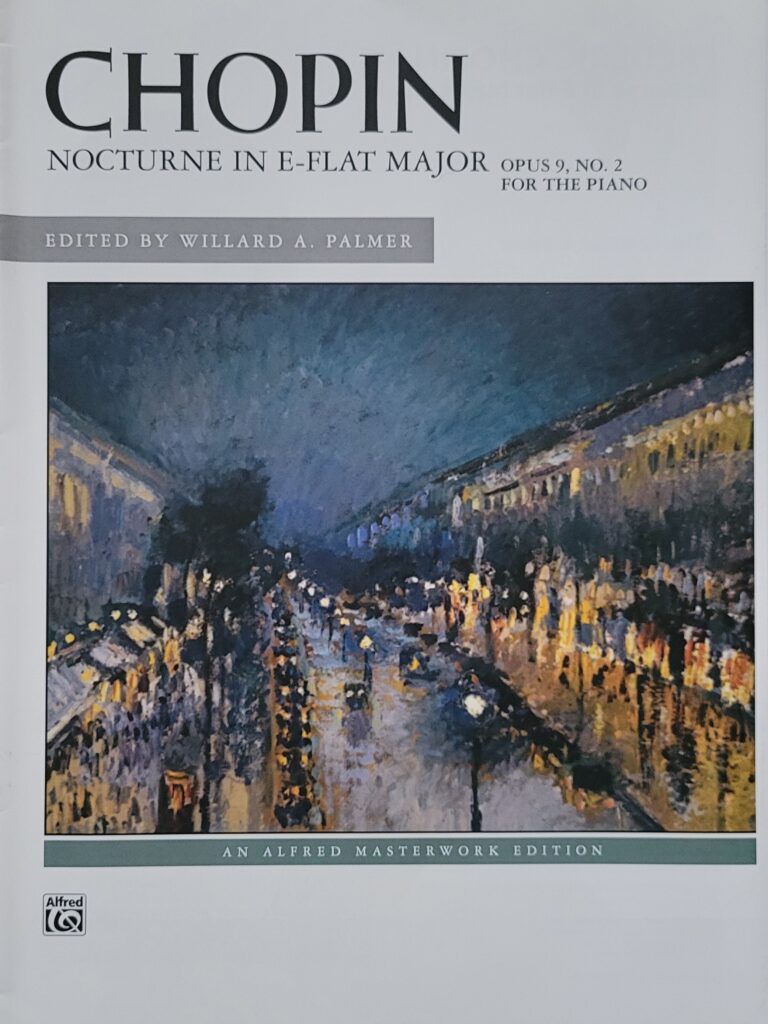
Chopin: Nocturne in E-flat Major, Op. 9 No. 2
Self-taught: 1998 to 2000
When I was twelve our wild and energetic instructor struggled with her health and had to stop teaching. While I missed lessons I also enjoyed the freedom to explore music on my own. Being homeschooled meant I had quite a bit of free time and was able to learn music quickly. Many of the things my teachers said remained with me: how to make a singing tone and use good fingering. When Mrs. Brusher closed her studio she gave my family some music from her collection including this book of Tchaikovsky pieces through which I often enjoyed sight reading.
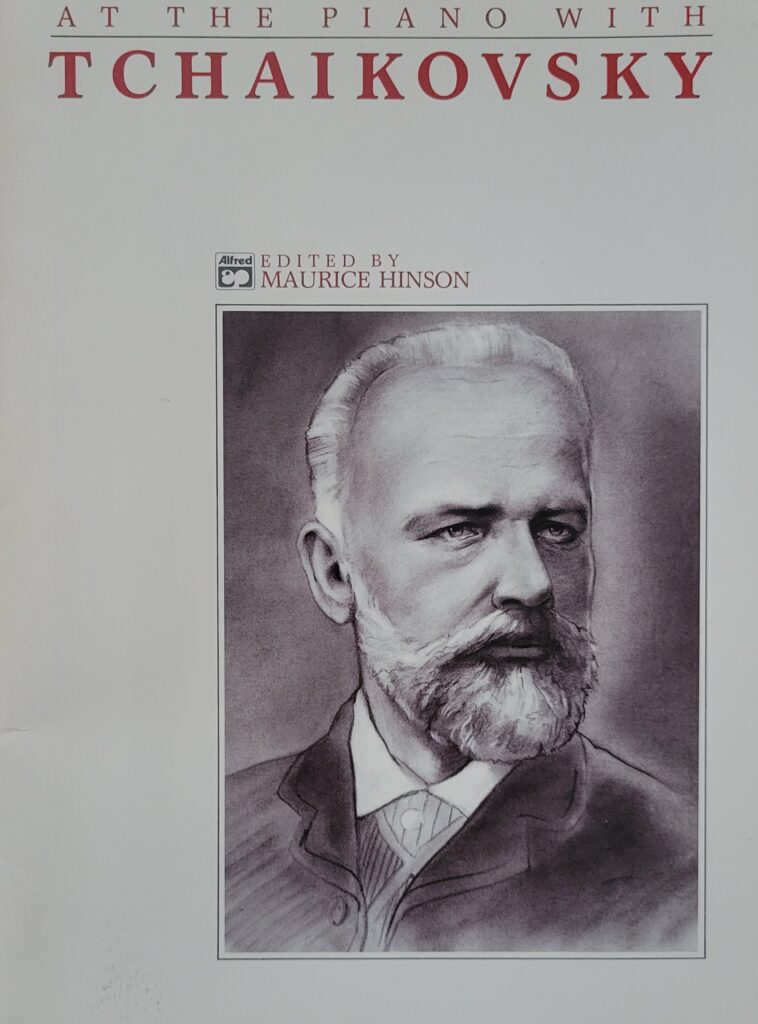
At the Piano with Tchaikovsky
I wanted to finish my Suzuki path even though I had stopped lessons. I obtained the rest of the Suzuki books and learned their contents during my middle school years. I have especially fond memories of playing Bach inventions, the minuets and gigue from the first Bach Partita, Le Coucou by Daquin, a Haydn sonata, the complete 10th, 11th, and 16th sonatas of Mozart (the old Suzuki editions contained all the movements), and the Paderewski minuet. Different people have different opinions on the Suzuki method. The Suzuki philosophy’s seeming distrust of the word “talent” could be a reason for that. Talent matters in the opinion of many, and it does seem true that nature plays an important role along with nurture. But no matter your opinion on talent many of us might agree that the Suzuki piano method features some well-selected repertoire, especially in the later volumes.
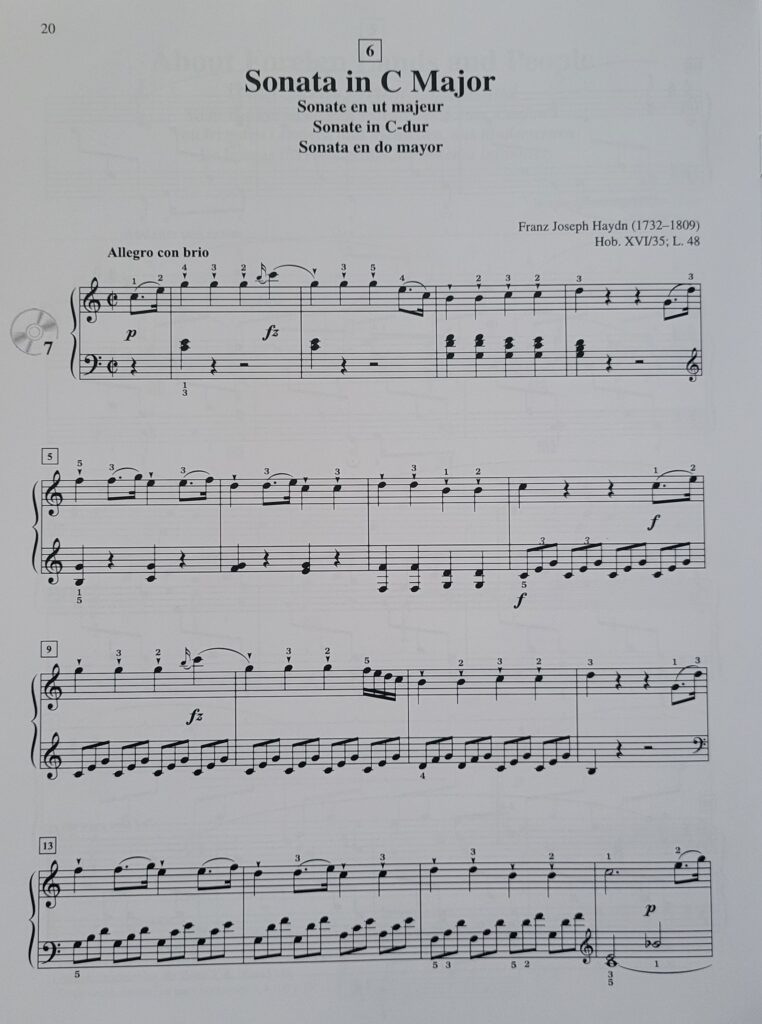
Haydn: Sonata in C major, Hob. XVI:35
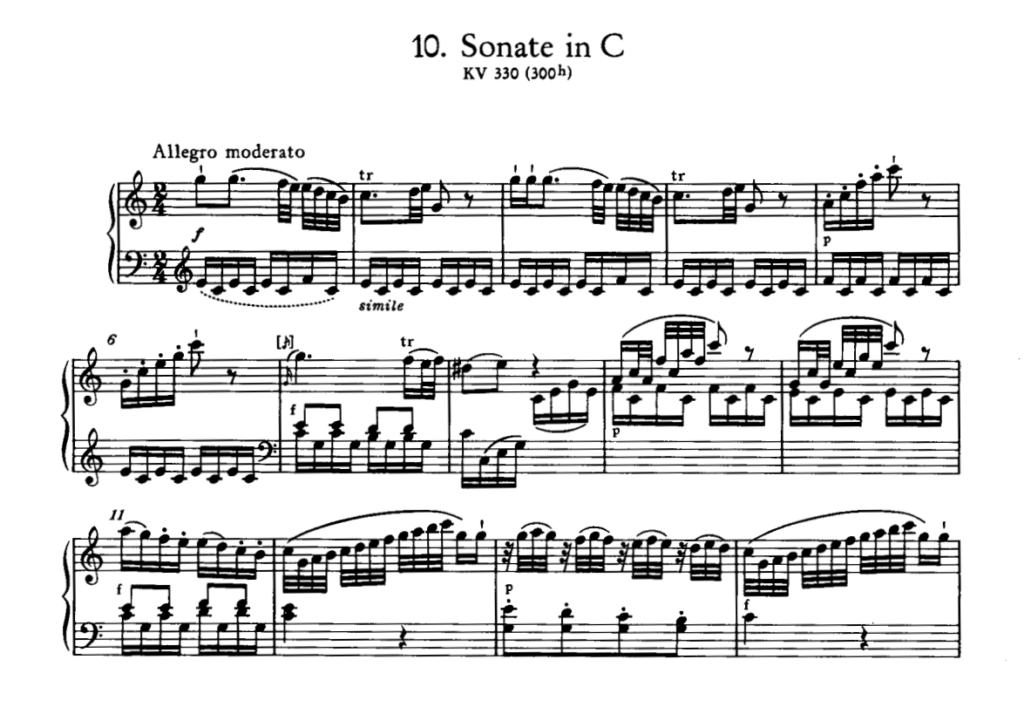
Mozart: Sonata in C Major K. 330

I’ll never forget the moment I discovered Schirmer’s Chopin Album for the Piano. When we joined her studio Mrs. Brusher had given Amy and me a mix tape of bootlegged Chopin and Mozart performances. Despite the cassette’s shady origins it contained excellent renditions of Chopin’s Grande valse brillante and Ballade in G minor, among other things. I listened to the cassette frequently, as well as another cassette by Van Cliburn called “My Favorite Chopin,” and dreamed of playing the music I heard. One day as a middle schooler I visited Piper Music next to the Mount Baker Theatre and was thrilled to find this Schirmer Chopin album with both of the Chopin ballades I’d heard on the cassettes (Nos. 1 and 3), several polonaises, the Berceuse and more. This Schirmer book,while perhaps not the most scholarly edition by contemporary standards, was the key to fulfilling my dream of playing these Chopin pieces. Over the next two years I taught myself from this collection and had learned almost everything in it on my own, including the Op. 53 Polonaise, by the time I was fourteen. The Berceuse was a particularly useful étude in disguise.
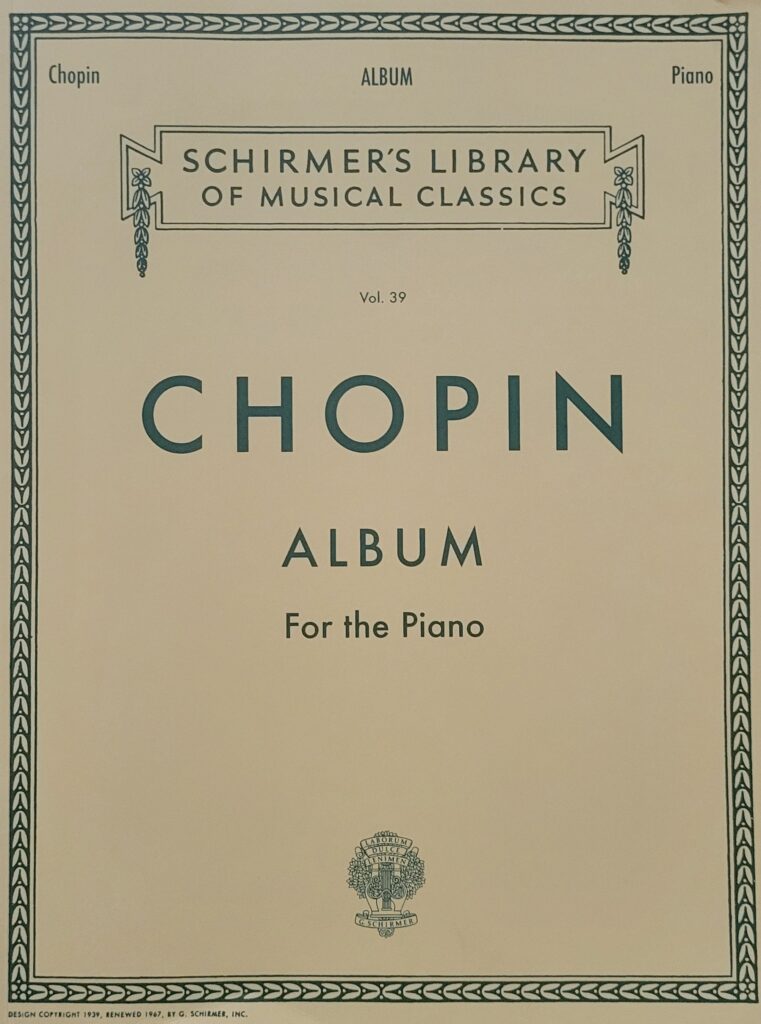
Chopin Album for the Piano
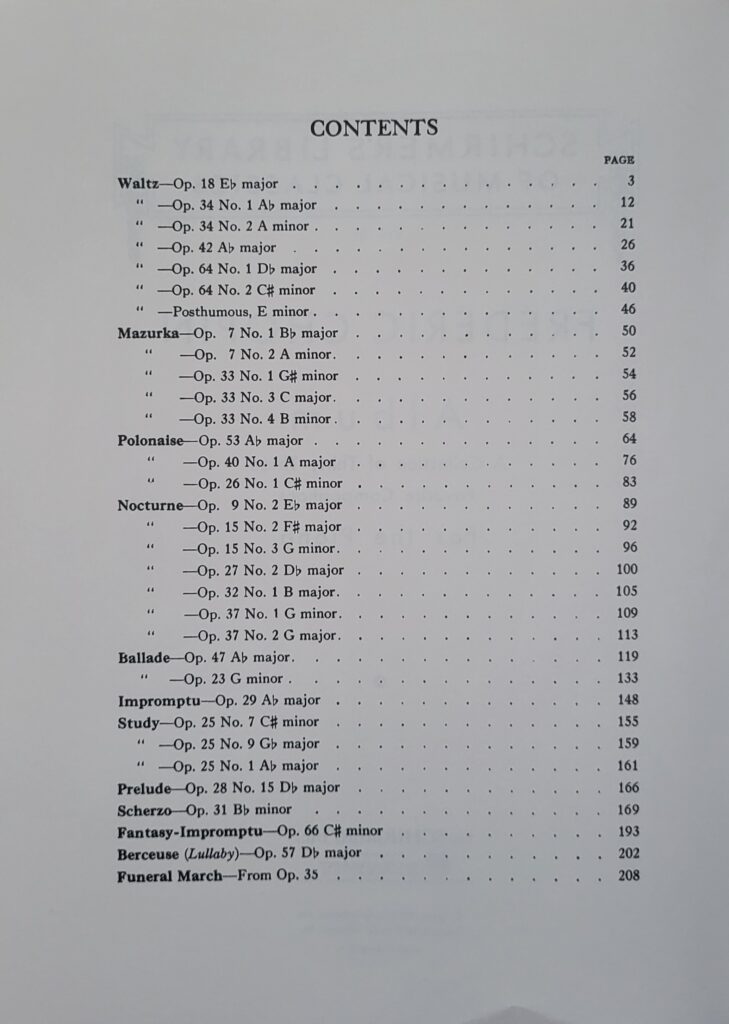
Chopin Album table of contents
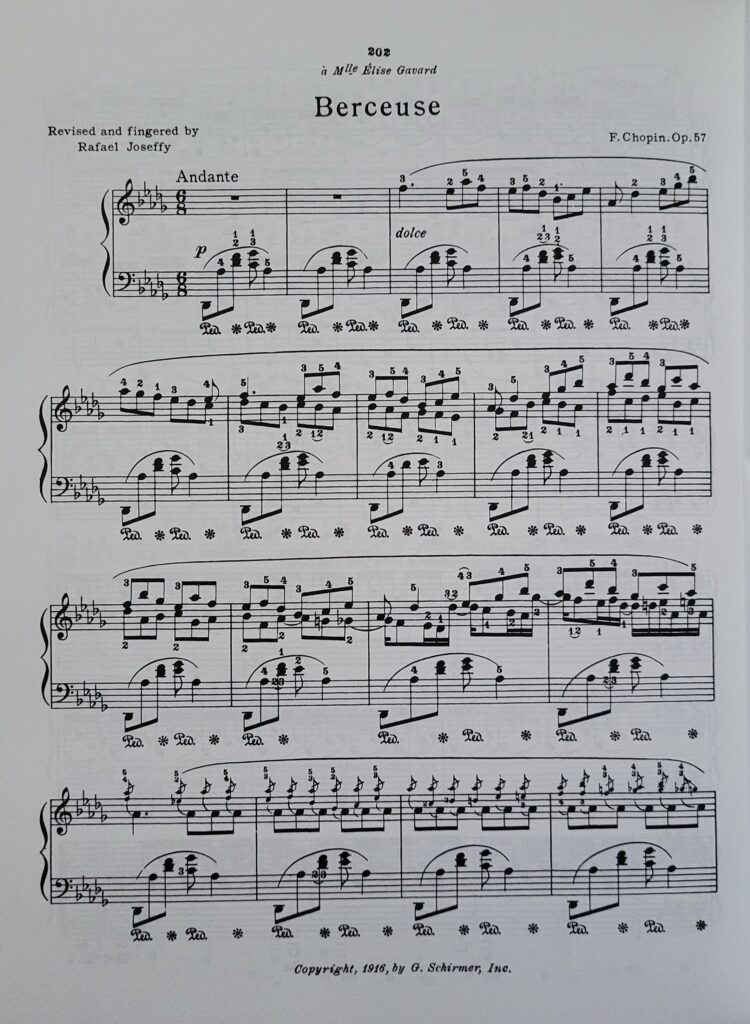
Chopin: Berceuse Op. 57
Other music I played during my middle school years included The Entertainer and Maple Leaf rags by Scott Joplin, the third Impromptu from D. 935 by Schubert, Children’s Corner by Debussy (the sheet music came from my maternal great-grandmother, an accomplished pianist in Copenhagen), and of course Clair de lune. When I was thirteen I learned my first complete Beethoven sonatas, Op. 13 and Op. 27 No. 2.
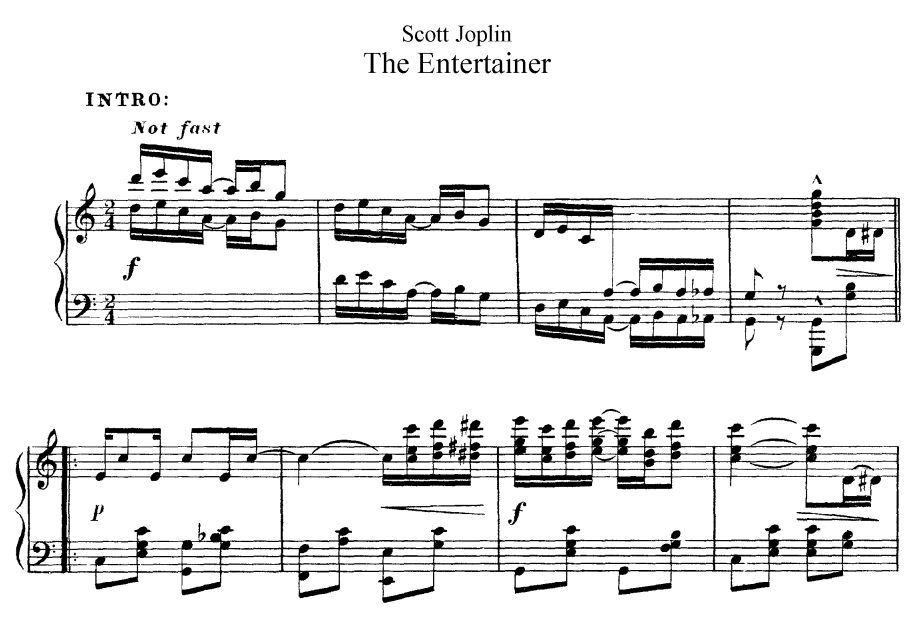
Joplin: The Entertainer

Debussy: Golliwog’s Cakewalk from Children’s Corner

Debussy: Clair de lune
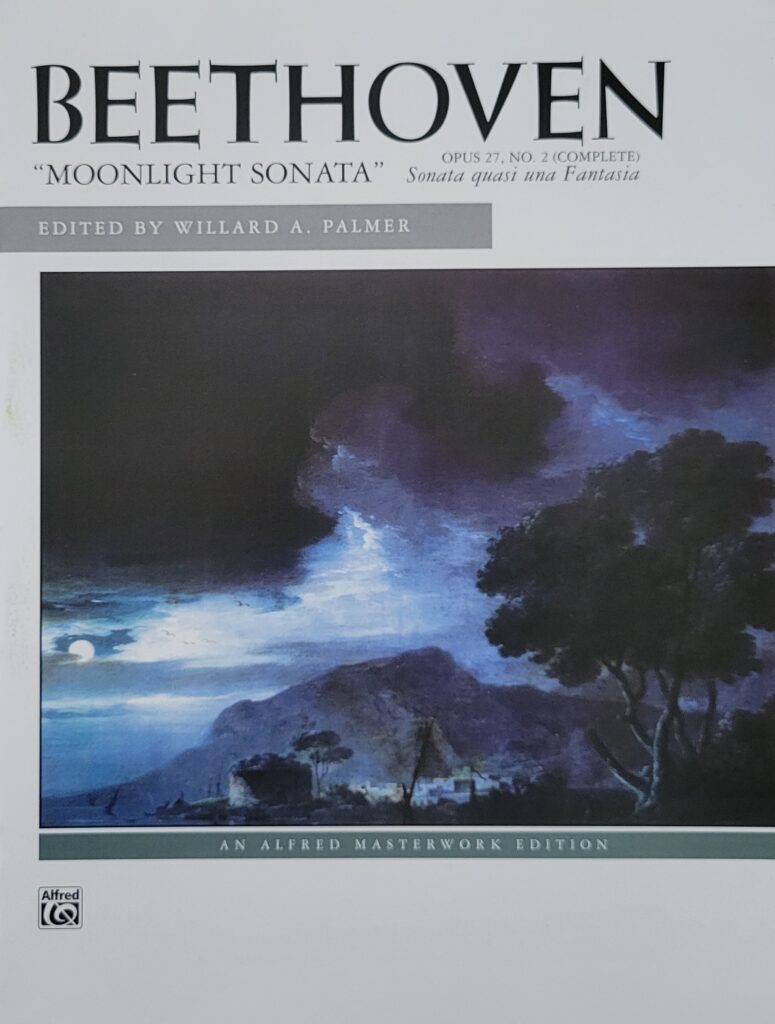
Beethoven: “Moonlight” Sonata Op. 27 No. 2
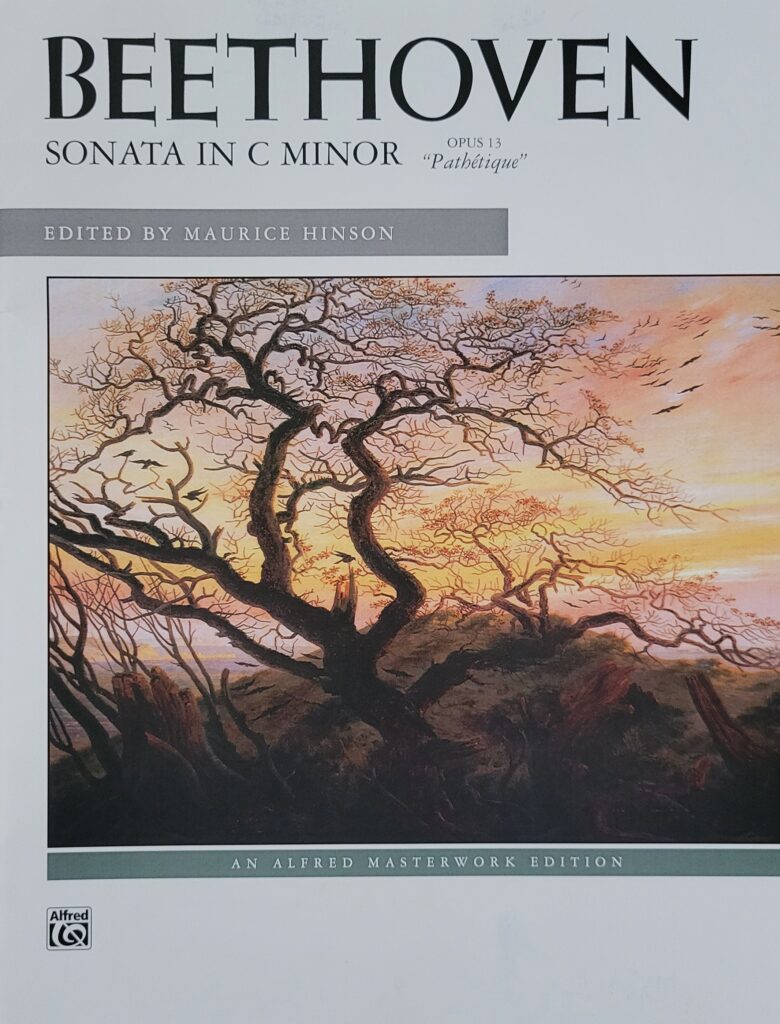
Beethoven: “Pathetique” Sonata Op. 13
Hymns of Worship and Remembrance
Last but certainly not least, I lived in an environment where singing hymns in polyphony was a regular activity. I learned to improvise on many of the hymns in this book in any key and frequently accompanied singing in church. This is how I learned voice leading and four part harmony without knowing it. Many of us have found other various forms of spirituality or none at all—my family’s church was just the particular flavor I knew during childhood.
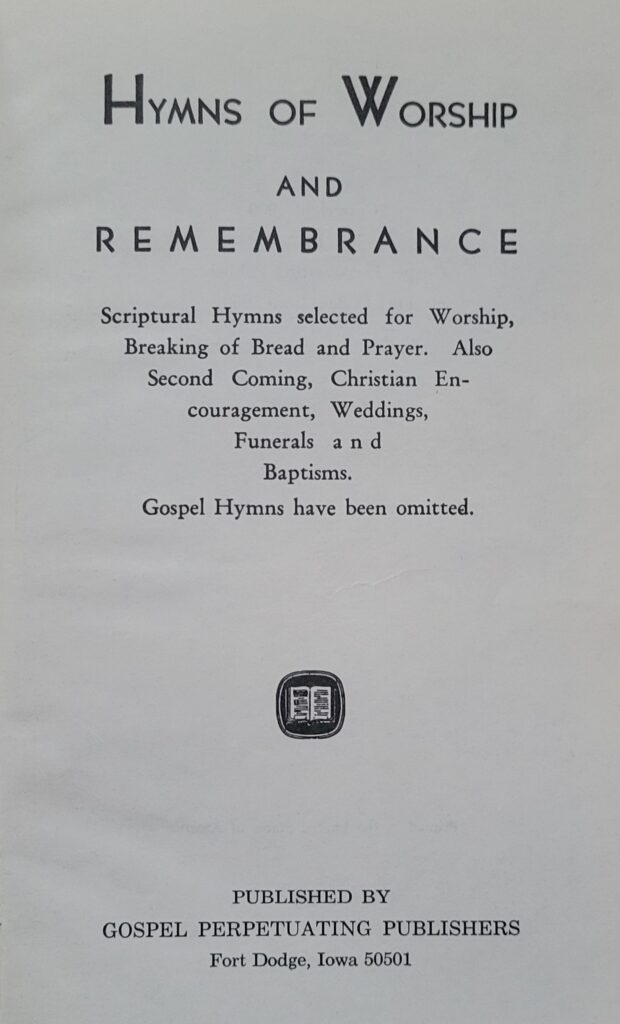
Hymns of Worship and Remembrance